
 Wouldn’t it be great to have such a compelling personality that you could persuade people to buy your product, adopt your point of view, or follow you to the ends of the earth? I promise I wouldn’t be a psychopath, and I’d really enjoy that kind of power. If you’re an empty nester/baby boomer like me, there may be a growing sense of urgency about writing the next chapter of your life. In the blink of an eye—or so it seems—children grow up, fly away from the nest, and start their adult lives.
of “compelling.” According to Google, “compelling” means “evoking interest, attention or admiration in a powerful or irresistible way.” Other synonyms offered are: “enthralling, absorbing gripping, riveting and spell-binding.” Sounds great, right? Who wouldn’t want to be riveting and spell-binding? Google’s definition is probably nearest and dearest to Neffinger and Kohut because it covers all the successful people in their book, from Martin Luther King, Robert Kennedy and Oprah Winfrey to successful salespeople, journalists and spies. However, not EVERY definition of compelling describes positive or desirable human traits. Let’s take Dictionary.com: “tending to compel, as to force or push toward a course of action.” (This is sounding more like the psychopath version.) Or how about Merriam-Webster’s definition: “strong and forceful: causing you to feel that you must do something.” Not bad, but it sounds awfully close to bullying, depending on the ethics of the compelling person. Hitler, Osama bin Laden and Jihad Johnny are compelling AND evil. Hopefully, future terrorists and criminals will NOT be reading

 According to Neffinger and Kohut’s analysis, compelling people possess an abundance of two simple (but often conflicting) qualities: strength and warmth. Strength, they say, is the province of people who “get things done” and the measure of how much an individual can “impose their will on the world.” Warmth, on the other hand, refers to empathy, familiarity and love. Achieving the perfect balance of strength and warmth is a much more complicated endeavor than you might imagine. It’s much more difficult—surprise, surprise—to be viewed in a positive light if you’re a strong woman. (Witness the ups and downs of Hillary Clinton). And, of course, it’s trickier to show warmth as a man without being perceived as weak.
 An hour later, my husband was reluctantly ushered in, if only to clear the waiting room. Armed with adorable pictures of Sarah (warmth) and a promise from a prominent child psychiatrist to offer their teachers a workshop if they accepted our daughter (strength), Henry pitched a compelling plea. The result? Our daughter got the first available opening.
 Perhaps the best and most enjoyable examples of compelling people offered in the book are Ayn Rand and the Beatles. These two are considered polar opposites. For Ayn Rand and her followers, strength is everything. Her view of the world is bleak: “The strong do what they can, and the weak suffer what they must.” The downside of this philosophy is that power alone can get things done through force and coercion. That’s not the world we want to build, is it? People who are all strength and no warmth may inspire fear and obedience, but they’re unlikely to earn much affection and love. At the other extreme, are the Beatles, who rose to fame with songs like “All You Need is Love,” in opposition to the Vietnam War. While the Beatles are perhaps, the most successful musical group of all time, plenty of people still believe nice guys finish last. Alas, I can’t carry a tune, and I’ll NEVER win the prize for Miss Congeniality. But maybe I can add a tablespoon of assertiveness and smile more often.
 As a baby boomer, still learning (and struggling) to manage technology and social media, I found the authors’ suggestions on how to courteously conduct these “conversations” with people in cyberspace especially helpful. I will certainly keep their ideas in mind as I continue to blog and tweet. I also particularly appreciated Neffinger and Kohut’s brief discussion of disability. As a mother of a young woman on the autistic spectrum, this quote was music to my ears: “Adversity builds character. Someone who manages to project even a moderate level of warmth and strength in the face of it is someone we can all admire.” Bravo, to Sarah and all her friends, who bravely go out into the world with their heads held high. The powers of persuasion sometimes transcend words.

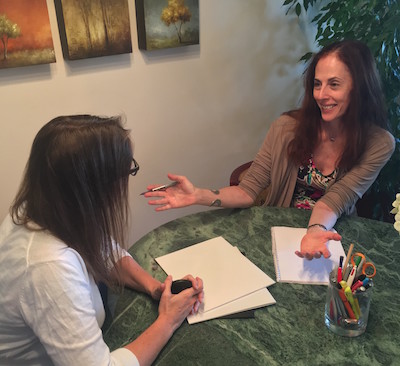
 Marguerite Elisofon is a New York City writer and the author of My Picture Perfect Family, a memoir about how her family navigated life with a child on the autistic spectrum before the internet and support groups existed. She also blogs about parenting young adults and disability related issues in The Never Empty Nest. Her writing has been featured in a variety of publications, including Time and NY Metro Parents magazine, and her family’s story has been featured by the NY Post, Fox News, The Daily Mail, and on Jenny McCarthy’s Dirty Sexy Funny radio show. A Vassar graduate, Marguerite was born and raised in New York City, where she still lives with her husband, Howard, in their mostly-empty nest. She is available to speak about a wide variety of issues relating to twins, parenting, and autism.