

Why are there so many more homeless people living in our streets? New Yorkers all over the city are asking. No wonder Mayor De Blasio’s approval rating has plummeted. The New York Times reported that more than half of New York voters (53%) disapprove of the way our mayor is handling poverty and homelessness, according to a poll released last week. De Blasio’s approval rating on handling homelessness was only 36%, a trend that was consistent across boroughs and ethnicities. In response, the mayor has announced a $22 million mental health effort that will include more caseworkers at shelters and more outreach personnel to tend to mentally ill people. A plan to deal with the low-income housing shortage is expected to be forthcoming in the fall. Like all politicians, De Blasio also blames his predecessor, Michael Bloomberg, for contributing to the homelessness of the poor and mentally ill. While De Blasio has rightly claimed that living on the streets “is not against the law,” urinating on the sidewalk or apartment building wall is a crime and a quality-of-life issue for all New Yorkers. Besides, doesn’t it seem like arguing about the legality of living on the street is missing the point in a big way?
 I don’t claim to have the answer to homelessness, but one thing I know for sure: New York is on the verge of becoming an exclusive playground for the rich. (Think Hunger Games.) As real estate prices sky rocket, owning a home anywhere in Manhattan, Brooklyn or Queens is becoming more and more out of reach for the middle class. Rentals are becoming less and less affordable as the supply of rent-stabilized and rent-controlled apartments continues to dwindle. In some ways, I believe we have created a culture that is the modern-day equivalent of pre-revolutionary France. Whatever the politicians say or do, they might as well be quoting Marie Antoinette who famously said of the hungry poor: “Let them eat cake.” With the exception of Michael Bloomberg, Jimmy Carter, and perhaps a few others, politicians are funded by wealthy individuals, corporations and super-PACs. None of them are going to play Robin Hood and risk losing their financial backers. Certainly De Blasio—despite his stated good intentions—has not made any headway in providing more or better quality housing for the most vulnerable members of society.

In The Journey Magazine, ALUT’s stated mission is to ensure “the well-being, rehabilitation, future and economic status of persons with autism in Israel.” While providing educational, residential, vocational, and leisure-time services to people with autism, ALUT works to promote their rights and improve the services available to them and their families. Now that sounds like a plan with vision, doesn’t it?
 At the opening ceremony of Fellowship House, Rabbi Eckstein addressed the crowd and said: “If we want to progress and set an example for the world through our values and care for our fellow man and society’s weakest, it can only be done by all three sectors—the government, the non-profit sector, and the business sector—working together. ‘A cord of three stands is not quickly broken,’ we learn in Ecclesiastes 4:12. The Fellowship House is an example of all relevant factors coming together.” Of equal importance, he emphasized, was that this house represented “Christian and Jewish friends around the world coming together to offer compassionate support for Israelis in need.”
Hello, America, is anyone listening?
 If Israel—a tiny nation perpetually at war—can provide a home and dignified lifestyle to young people with autism, why can’t we do that here in the USA, with greater resources and more power? Come to think of it, why limit the FellowshipHouse model to people with autism? Maybe it’s a pipe dream, but why not expand Fellowship philosophy to help house our homeless poor, mentally ill and learning disabled populations? Instead of allowing the chaotic avarice created by various “interest groups” contributing millions of dollars to campaigns where politicians give speeches about complicated problems that they hope will please their constituents, why not invest in concrete solutions? What about something simple and obvious like homes for all humans?

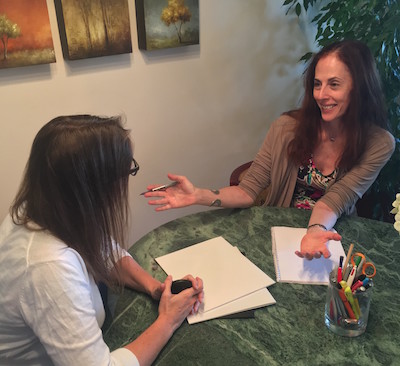
 Marguerite Elisofon is a New York City writer and the author of My Picture Perfect Family, a memoir about how her family navigated life with a child on the autistic spectrum before the internet and support groups existed. She also blogs about parenting young adults and disability related issues in The Never Empty Nest. Her writing has been featured in a variety of publications, including Time and NY Metro Parents magazine, and her family’s story has been featured by the NY Post, Fox News, The Daily Mail, and on Jenny McCarthy’s Dirty Sexy Funny radio show. A Vassar graduate, Marguerite was born and raised in New York City, where she still lives with her husband, Howard, in their mostly-empty nest. She is available to speak about a wide variety of issues relating to twins, parenting, and autism.