
- Turn the reins of my daughter’s life over to her and micromanage less.

- My life is another year shorter, so I need to pick my battles.
- Spend more time with people I love AND enjoy; avoid the others.
- Stop trying to persuade people to listen to my point of view when they are incapable of understanding it.
- Continue to pursue my dreams while helping my daughter pursue hers.


- Advocate passionately and honestly for young adults with autism whenever and wherever possible.
- Help my daughter with autism earn a living as an actress and autism spokesperson.
- Celebrate EVERY victory, no matter how small. When there’s a big victory—like the opening of Samantha’s movie, Keep the Change—savor every moment.

- Go on an exotic couple’s vacation. My husband and I should celebrate our 30 years of marriage. If not now, when?

- Instead of acting or reacting, choose to do nothing—difficult but often the most effective course of action.
- Continue to be passionate and honest even if people disagree or misunderstand me.
- Find more fun activities to let go of negative energy (other than dance and yoga).
- Laugh more.

- Eat, drink and be merry whenever possible. Don’t wait for holidays


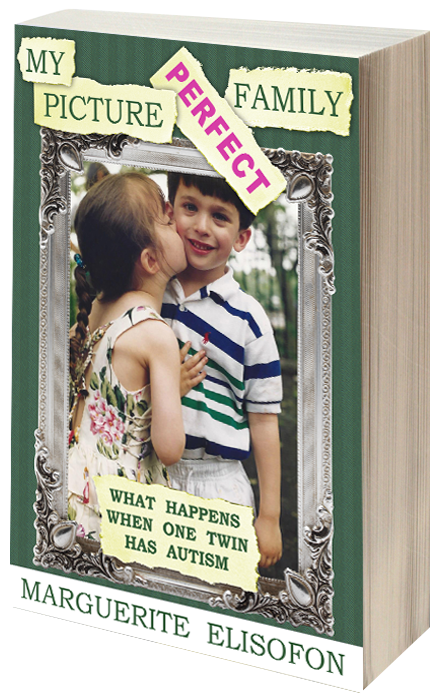
 Marguerite Elisofon is a New York City writer and the author of My Picture Perfect Family, a memoir about how her family navigated life with a child on the autistic spectrum before the internet and support groups existed. She also blogs about parenting young adults and disability related issues in The Never Empty Nest. Her writing has been featured in a variety of publications, including Time and NY Metro Parents magazine, and her family’s story has been featured by the NY Post, Fox News, The Daily Mail, and on Jenny McCarthy’s Dirty Sexy Funny radio show. A Vassar graduate, Marguerite was born and raised in New York City, where she still lives with her husband, Howard, in their mostly-empty nest. She is available to speak about a wide variety of issues relating to twins, parenting, and autism.
I agree with these as well; and I do not have children, but they apply to everyone.
You’re right. But not everyone is involved in autism and disability advocacy, an area filled with controversy and emotional minefields. People with neurotypical families may have other issues and interests which would probably inspire different resolutions.